About two decades ago, as a young Carte Blanche producer, I did a piece on sky-rocketing property prices on the Atlantic Seaboard. Through that story, broadcast in 2003, I met businessman Alon Kowen, a property commentator who took our crew on a tour of the high-end backstreets of Clifton and Camps Bay, overlooking the azure Atlantic, marvelling at the multi-million-rand price tags on the palatial homes of the rich and famous. At the time, there was a natural excitement about the boom, which was also interpreted as a vote of confidence in post-apartheid South Africa. But there were equally concerns that this string of seaside communities on the tip of Africa, would become built up, boxed in and over-subscribed, like the sunshine, holiday strips on the Portuguese, Spanish and French coastlines.

Eaton De Jongh filming the sunset from near Nettleton Road, Clifton, the most expensive address in Africa.
A conversation with Alon Kowen prompted us to take another look at what the market is doing today, twenty-three years later. And the prices blew me away, as did the sheer scale of development, in particular the wave of luxury residential apartment blocks that are set to transform the city's skyline forever. The City of Cape Town's commitment to densification — making space for millions more residents in the Mother City — is driving this push to build higher, reshaping the urban landscape, its feel, and quite possibly its future demographic. It's a story worth telling, because the ripple effects of this property boom are already being felt in other real estate hotspots across the province.
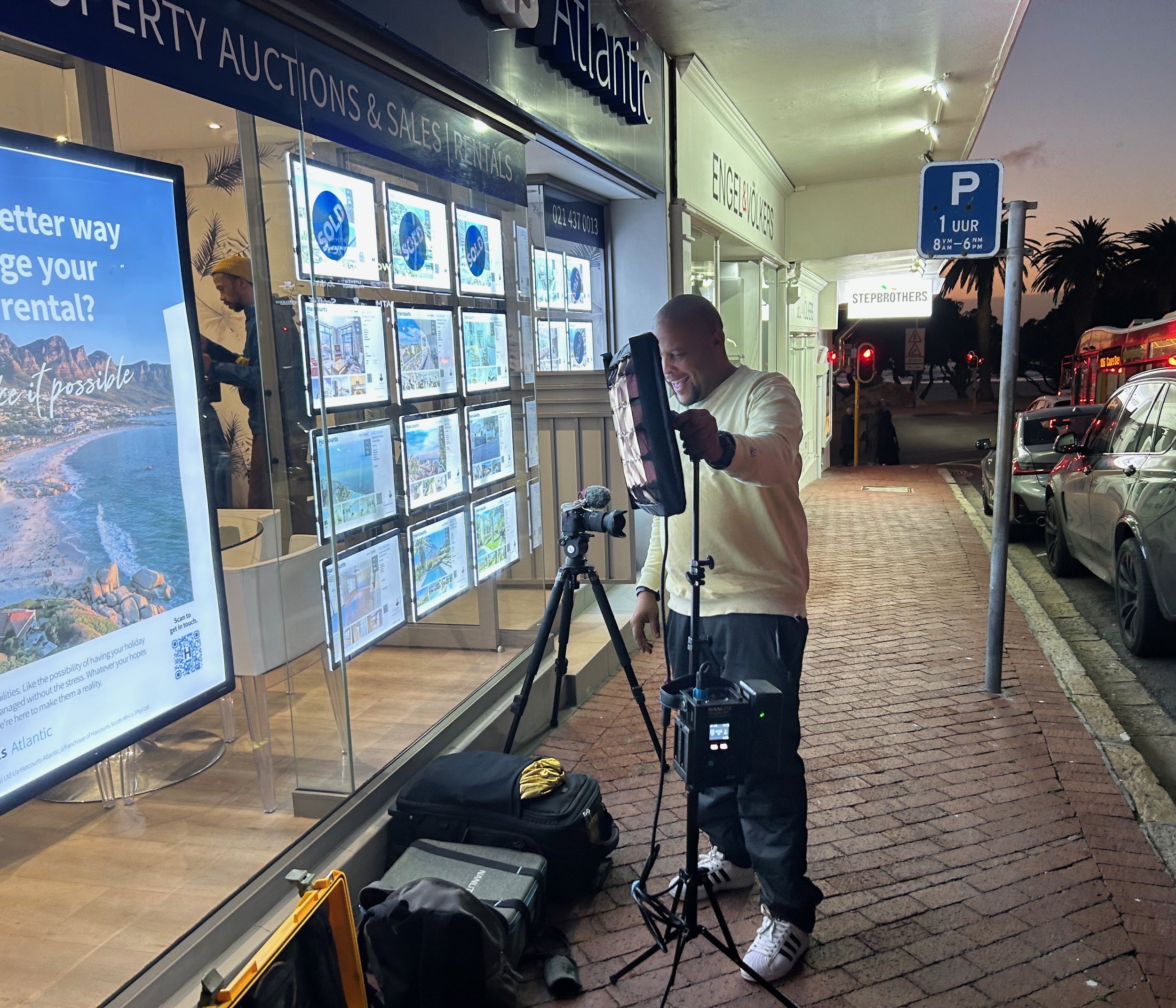
Shining a light on property prices on the Atlantic Seaboard - outside Harcourts in Camps Bay
At Carte Blanche, follow-up stories are part of the job. But a follow-up decades after broadcast is unusual — almost a generational gap in time, and certainly a story of dramatic technological change. I dug the original footage out of my attic on a Betacam tape, had it digitised, and wove it into this new insert. It was a small, private victory for personal archives. I have been accused of being a hoarder because I like to live with the past beside me. I like tangible reminders of how my personal story is interwoven into the greater tapestries of family, communal and national histories. My boxes of Betacam tapes, originating from the tech era before the digital revolution, are just one example of what I have kept in the attic, a cavernous space which houses numerous boxes of books, papers and outdated recording equipment.

Scramble for Cape Town, Carte Blanche circa 2023 stored wtih love in my box of old Betacam Tapes. In those days, one story would take a whole box of Betacams - now we use cards and drives.
So I have sympathy with the residents on the Atlantic Seaboard who are seeing the contours of their historic suburb disappear before their eyes, as huge, noisy machines flatten old buildings to make way for these new luxury apartments. The developments are presaged by online advertisements which promise a chic, newly-made type of lifestyle, in which Cape Town’s past is not acknowledged. The marketing images show shiny, happy people from a different world to the one I know, sunning themselves on balconies, descending staircases, having a massage, or sipping cups of coffee as they enjoy the view of Table Mountain and the sea. And for the Atlantic Seaboard, the sheer number of construction sites suggests that developers have the wind in their sails (sales!) as they navigate the bylaws and departures from by-laws that make these big block constructions legal. I would hope that the city fathers and mothers, who might understand the extraordinary history of Cape Town, would place value on the heritage of communities, who wish to keep a balance of authentic buildings to preserve their sense of place and self.
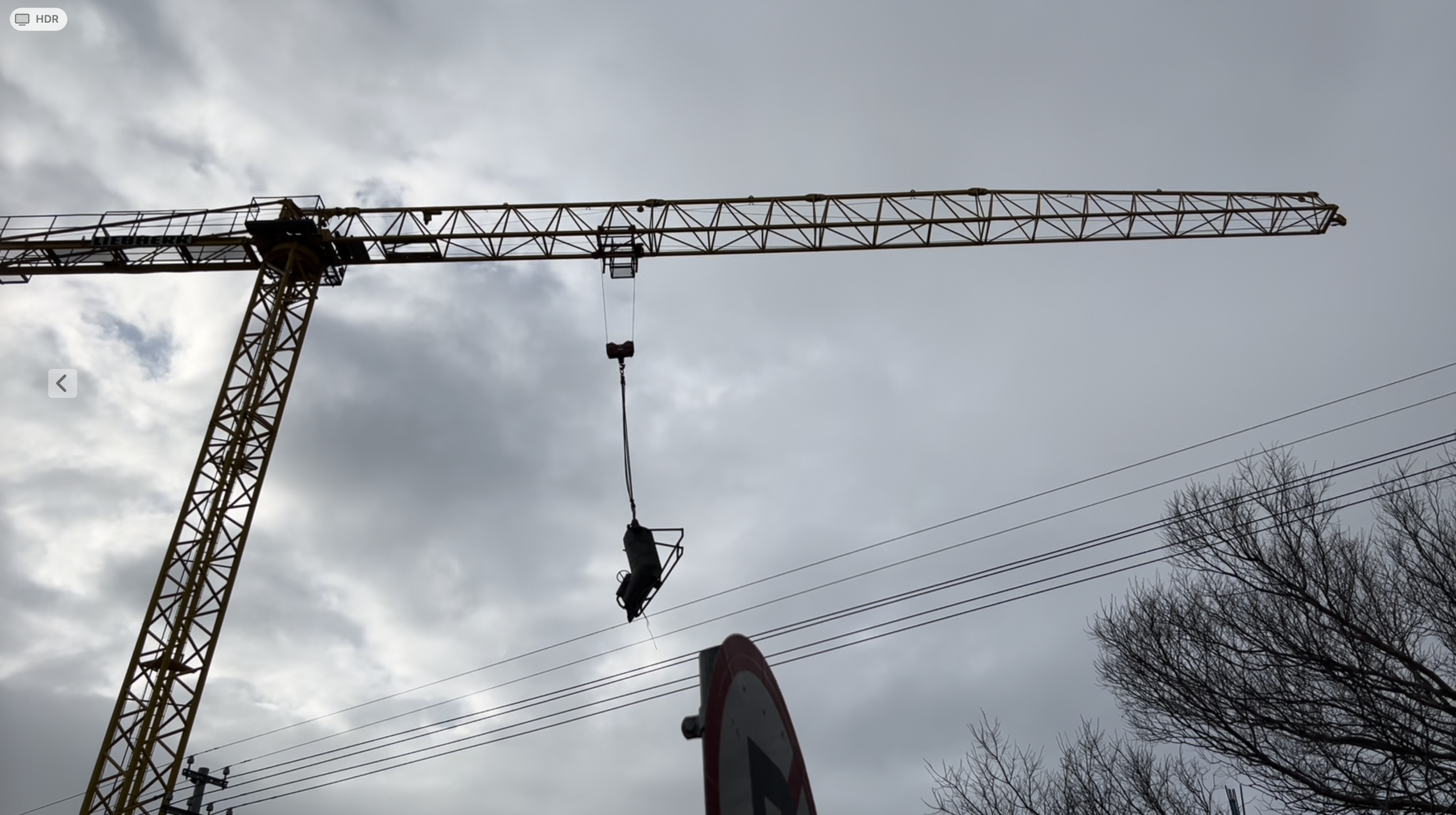
One of the many cranes hovering above residential suburbs on the Atlantic Seaboard, making home-owners jittery about the future of their communities.
And this scale of build is making residents uneasy. Looking deeper, there are some contradictions in the City’s position on densification – not least that much of the development I saw appeared to be aimed at tourists and digital nomads, remote workers who can transplant from city to city at a whim, with a laptop and a lucrative contract to work for a company somewhere else in the world. In practice this means that many apartments are empty for much of the winter, (in Sea Point for example, some estate agents we spoke to say up to 40 per cent), meaning the densification drive hailed by the city is counter-intuitively hollowing out the communities that live there. The website www.insideairbnb.com shows the presence of Airbnb short-term lets on a map of the Atlantic Seaboard as dense, red confetti. It’s arguably appropriate to provide more housing stock by building upwards. However, locals cannot afford to live in a community where prices are set by a cash-flush floating community of tourists, and foreign workers and their landlords. What then is left when they all fly away? And who really is building what for whom?
My story touched on these issues and there are many others, not least the crisis of affordability of housing in Cape Town for those working in it, or born to it. Some of these concerns will be ventilated in a court case over a particularly controversial development in St John’s Road, between Sea Point Main Road and High Level Road in August this year. It’s a case that civic groups and rate-payers associations will be watching closely because of what it will tell us about the power of developers versus residents, to change the historical skyline of the city, and bulldoze objections from people who have a past, and would like to hang on to it.